Blockchain technology has evolved far beyond cryptocurrency. Today, organizations across finance, real estate, healthcare, logistics, and government sectors are exploring blockchain to improve transparency, security, automation, and operational efficiency.
As adoption continues to grow, businesses are increasingly looking beyond basic blockchain implementation and focusing on the technologies shaping the next phase of innovation. Understanding these developments can help organizations identify new opportunities and make smarter technology investments.
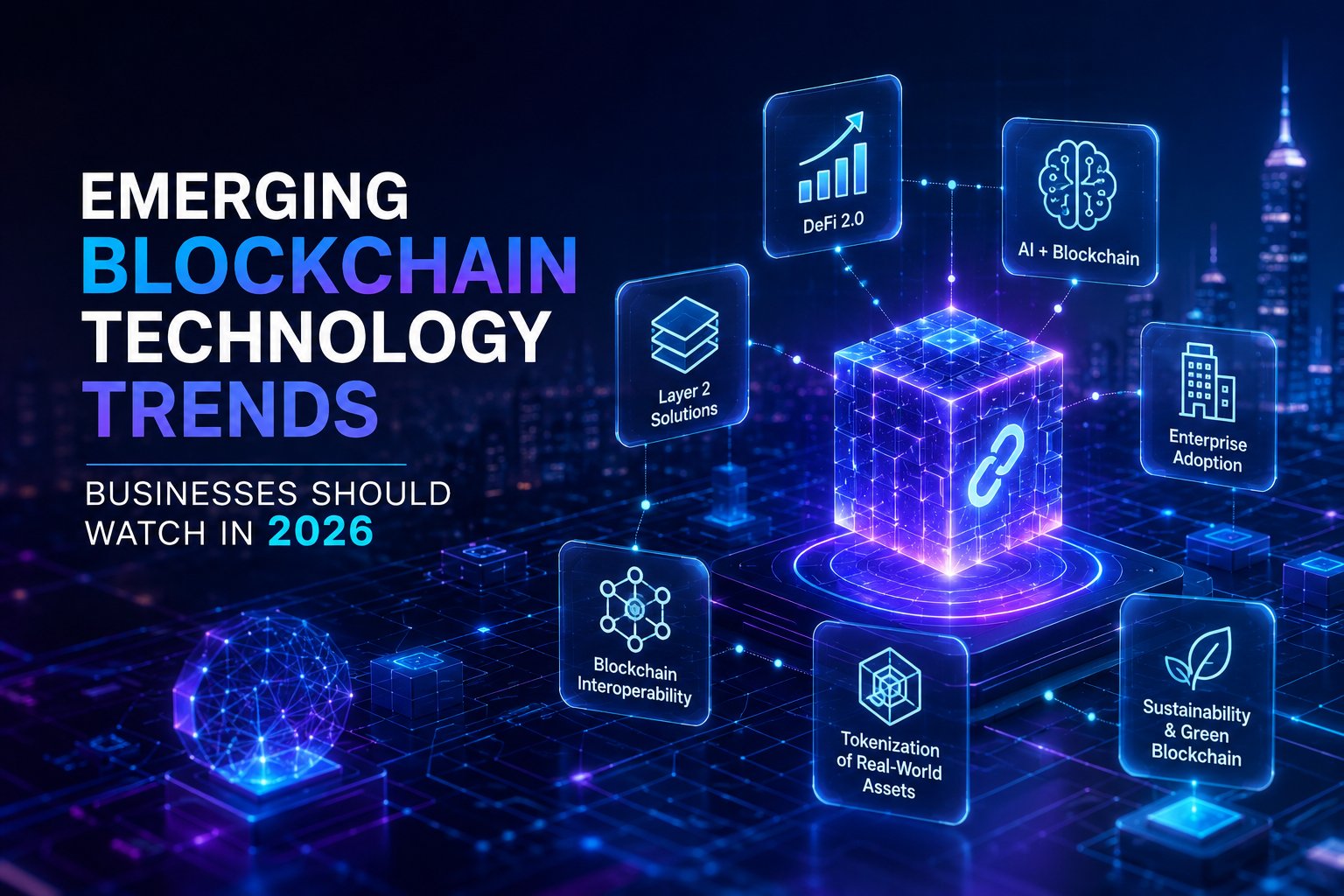
The biggest blockchain technology trends in 2026 include blockchain interoperability, AI-powered blockchain solutions, and the tokenization of real-world assets. Together, these innovations are expanding how businesses use blockchain in practical, scalable ways.
Why Blockchain Adoption Continues to Grow
Businesses are under constant pressure to improve efficiency, strengthen data security, and build trust across digital operations. Blockchain technology addresses many of these challenges by creating transparent, tamper-resistant systems that reduce reliance on manual verification and intermediaries.
Across the UAE and globally, blockchain is increasingly being explored for:
- Supply chain visibility
- Smart contracts
- Digital identity verification
- Asset management
- Financial services
- Property transactions
- Enterprise automation
As organizations move from experimentation to implementation, several blockchain development trends are emerging as clear priorities.
1. Blockchain Interoperability Is Becoming Essential
One of the biggest limitations of early blockchain networks was their inability to communicate effectively with one another.
Many organisations now operate across multiple blockchain ecosystems, which makes interoperability increasingly important. Blockchain interoperability refers to the ability of different blockchain networks to exchange data, assets, and information seamlessly.
For businesses, this creates several advantages:
- Improved data sharing between platforms
- More flexible blockchain ecosystems
- Reduced operational silos
- Better scalability
- Enhanced user experiences
As enterprise blockchain adoption grows, businesses are increasingly seeking cross-chain blockchain solutions that allow multiple networks to work together efficiently. This trend is expected to play a major role in the future of enterprise blockchain development.
2. AI and Blockchain Integration Is Creating Smarter Business Systems
Artificial intelligence and blockchain are two of the most transformative technologies shaping modern business. When combined, they create powerful opportunities for automation, intelligence, and trust.
AI excels at analysing data, identifying patterns, and supporting decision-making. Blockchain provides transparency, security, and verifiable records. Together, they can help businesses build systems that are both intelligent and trustworthy.
Examples of AI-powered blockchain applications include:
- Automated smart contracts
- Fraud detection systems
- Supply chain optimisation
- Predictive analytics
- Regulatory compliance monitoring
- Intelligent asset management
For businesses investing in digital transformation, AI blockchain solutions are becoming an increasingly valuable way to improve operational efficiency while maintaining transparency and accountability.
As demand for automation grows, the integration of AI and blockchain is likely to become one of the most influential trends in blockchain development.
3. Tokenization of Real-World Assets Is Expanding Investment Opportunities
Asset tokenization is rapidly emerging as one of the most significant blockchain use cases for businesses and investors alike.
Tokenization involves converting ownership rights of physical or tangible assets into digital tokens recorded on a blockchain. These assets may include:
- Real estate
- Commodities
- Artwork
- Infrastructure assets
- Private investments
By creating digital representations of physical assets, blockchain enables greater accessibility, improved liquidity, and fractional ownership opportunities.
In regions such as the UAE, growing interest in tokenized real estate is attracting attention from investors, developers, and technology providers. Businesses are increasingly exploring blockchain asset management solutions that enable more efficient ownership structures and transaction processes.
As regulations continue to evolve, asset tokenization is expected to unlock new opportunities across multiple industries.
How Businesses Can Prepare for Emerging Blockchain Trends
While blockchain technology continues to evolve, successful adoption begins with identifying practical business applications.
Organisations considering blockchain implementation should:
- Evaluate existing operational challenges
- Identify opportunities for automation
- Assess cross-platform integration requirements
- Explore asset tokenization opportunities
- Review data security and compliance requirements
- Partner with experienced blockchain development specialists
Focusing on business outcomes rather than technology alone helps ensure blockchain investments deliver measurable value.
The Bottom Line
Blockchain is entering a new phase of enterprise adoption, driven by technologies that make networks more connected, intelligent, and commercially valuable.
From blockchain interoperability and AI-powered blockchain solutions to real-world asset tokenization, the trends shaping 2026 are expanding the practical applications of blockchain across industries.
At Digitalroar, we help businesses explore and implement blockchain solutions that align with their strategic goals. Whether you’re developing enterprise blockchain applications, smart contract platforms, AI-integrated systems, or tokenization solutions, our team delivers secure, scalable technologies designed for long-term growth and innovation.